

Emirates workforce grows to nearly 131,000 employees amid global expansion
New crew housing and training centres support long-term growth
DUBAI – Emirates significantly expanded its workforce during the 2025-26 financial year as the airline and dnata accelerated recruitment to support fleet growth, route expansion and rising global travel demand.
The Emirates Group’s total workforce increased by 8 per cent to 130,919 employees worldwide, making it one of the largest aviation employers in the region.
The latest hiring push covered operational, engineering, hospitality, cargo, technology and customer service roles across international markets.
Hiring growth
The workforce expansion came during a year in which Emirates added new aircraft, launched additional routes and increased investments across its customer operations.
The Group also reported growth in Emirati employment, with the UAE national workforce surpassing 4,000 employees.
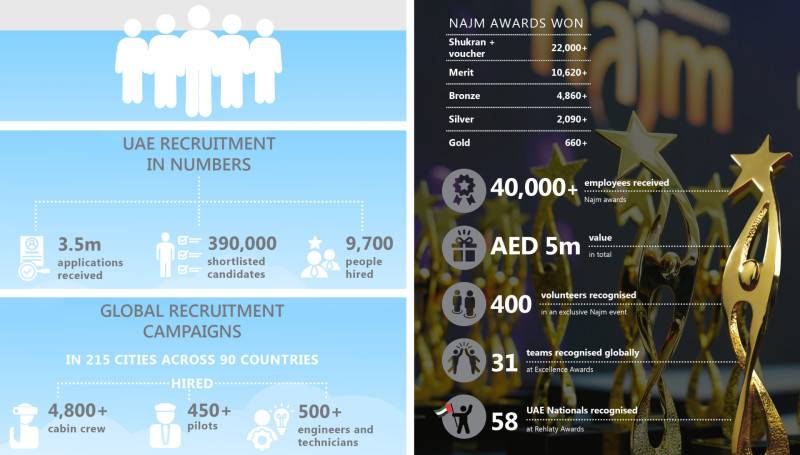
Emirates said its programmes focused on attracting, developing and retaining local talent continued delivering results as the company expanded its long-term capabilities.
The airline and dnata continued large-scale recruitment activity throughout the year to support growing passenger volumes, cargo demand and airport operations.
The expansion in staffing also reflects the scale of Emirates Group’s wider operations beyond passenger flights, including cargo handling, catering, airport services and travel businesses.
Training plans
To support future growth, Emirates launched several new infrastructure and training projects during the financial year.
The airline secured a site at Dubai Investments Park for its future Cabin Crew Village, a multi-billion-dirham residential development designed to accommodate 12,000 crew members.
Emirates also opened a new flight crew training centre aimed at supporting future aircraft deliveries and operational expansion.
In addition, the company launched the Emirates Centre of Hospitality, which will provide training for the airline’s 25,000 cabin crew employees.
The centre is designed to strengthen service standards as Emirates continues positioning itself around premium travel and high-end passenger experiences.
Training requirements have increased sharply alongside the airline’s ongoing aircraft retrofit programme and the arrival of Airbus A350 aircraft featuring new-generation cabin products.
Expansion drive
The workforce growth aligns with Emirates’ wider expansion strategy.
During the financial year, Emirates launched services to Da Nang, Shenzhen, Hangzhou and Siem Reap while growing its network to 152 cities in 80 countries.
The airline also invested Dh17.9 billion across aircraft, technology, facilities and equipment.
At the 2025 Dubai Airshow, Emirates announced further aircraft investments worth $41.4 billion, underlining the scale of future operational growth expected over the coming decade.
The Group’s strong financial performance supported continued investment in recruitment and employee infrastructure despite geopolitical disruption in the Gulf region during the final month of the financial year.
Emirates said its people remain central to operational resilience and customer service delivery as the airline continues expanding across international markets.